Closing the Female Athlete Research Gap
For most of the history of sports science, female athletes have been studied, monitored, and trained as though they were simply smaller versions of male athletes. The standard physiological models used to design training programs, interpret recovery data, and assess readiness were developed predominantly in male populations, and then simply applied universally, regardless of sex. This approach has left female athletes systematically underserved by performance science, and has contributed to an array of outcomes ranging from suboptimal performance to elevated injury risk and long-term health consequences. In recent years the scientific community has finally begun to address this gap in earnest. Research published in the British Journal of Sports Medicine and allied journals has established clearly that hormonal fluctuations across the menstrual cycle produce significant, measurable variations in muscle strength, aerobic capacity, injury risk, recovery rate, and psychological readiness. Leading advocates like Dr Stacy Sims have written books and developed comprehensive training courses specifically built on research and experience with the unique physiology of women. Ignoring this reality in a female athlete’s training program is not scientifically neutral, it is an active choice to leave performance and health on the table.
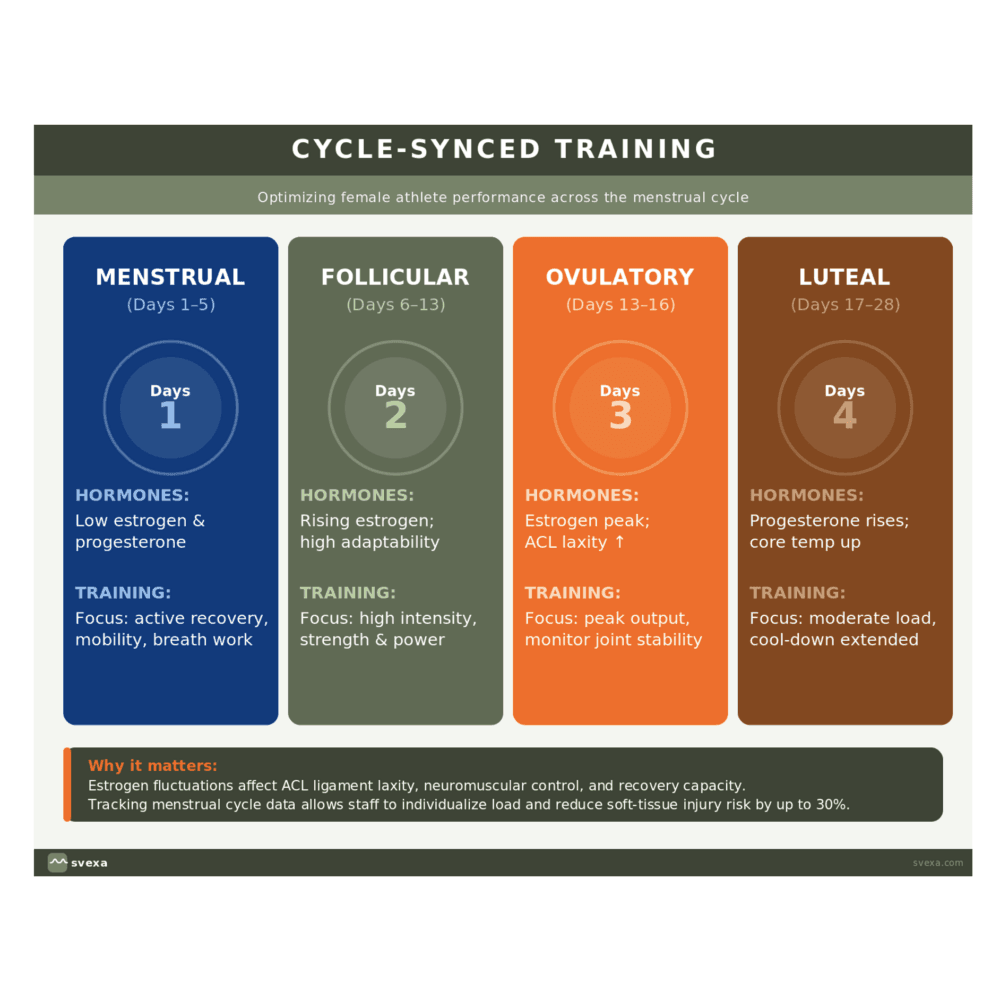
The Four Phases and Their Performance Implications
Menstrual Phase (Days 1–5)
The menstrual phase is characterized by the lowest levels of both estrogen and progesterone. Many athletes report reduced motivation, mood disturbance, increased fatigue sensitivity, and in some cases dysmenorrhoea-related pain that limits training. Research suggests that high-intensity training during this phase may be less well-tolerated, and that relative rest or reduced intensity is appropriate for athletes who are symptomatic. However, individual variation is substantial (some athletes report no performance effects during menstruation) and monitoring individual responses is more valuable than applying population-average recommendations.
Follicular Phase (Days 6–13)
Rising estrogen during the follicular phase is generally associated with the highest performance capacity across the cycle. Research indicates improved force production, enhanced aerobic capacity, and stronger cognitive function during this phase. The follicular phase is widely considered the optimal window for high-intensity training blocks, strength maximal efforts, and technically demanding skill work that requires peak neuromuscular function.
Ovulatory Phase (Day 14)
The ovulatory phase is associated with peak estrogen and an LH surge. Research from the Journal of Science and Medicine in Sport has documented an elevated ACL injury risk around ovulation, attributed to estrogen’s effects on ligament laxity. Female athletes with a history of knee injuries should exercise particular caution regarding explosive cutting and landing movements during this period, and coaches should ensure programming accounts for this evidence-based risk window.
Luteal Phase (Days 15–28)
The luteal phase — characterized by rising progesterone and declining estrogen after ovulation, is associated with elevated core body temperature (raising perceived exertion in heat), increased protein catabolism, and for many athletes, onset of premenstrual symptoms including mood disturbance, bloating, and fatigue in the final days. Training quality may decline, and recovery requirements may be elevated. Nutritional support, particularly protein and carbohydrate adequacy, is especially important during the luteal phase.
Practical Implementation of Cycle-Informed Training
Implementing a cycle-informed training approach does not require discarding existing periodisation frameworks — it requires layering individual hormonal context onto them. The practical steps are:
- Systematic cycle tracking: athletes log their cycle phases using a validated app or wellness questionnaire integrated into the monitoring system
- Phase-labelling of training plans: coaches have visibility of where in their cycle each athlete is when reviewing the week’s program
- Flexible intensity windows: high-intensity sessions are planned preferentially in the follicular phase, with built-in flexibility to modify if hormonal symptoms are severe
- ACL risk awareness: explosive movement sessions are flagged if they fall in the periovulatory window for athletes with ACL history
- Individualization over prescription: monitoring individual athletes’ actual responses builds a more accurate picture than relying on population-average phase recommendations
Beyond the Cycle: The Relative Energy Deficiency in Sport (RED-S) Risk
Cycle-informed training exists within a broader female athlete health context. Relative Energy Deficiency in Sport (RED-S), formerly known as the Female Athlete Triad, represents one of the most significant health risks in women’s sport. RED-S occurs when energy availability is insufficient to support both the demands of training and essential physiological functions. Consequences include menstrual dysfunction, reduced bone mineral density, impaired immunity, hormonal dysregulation, and elevated injury risk. The International Olympic Committee’s RED-S consensus statement provides the definitive clinical framework. Screening all female athletes for RED-S risk should be a standard component of pre-season medical assessment, and nutritional monitoring should be integrated into the athlete’s overall performance data profile.
How svexa accounts for the unique needs of female athletes
Svexa’s monitoring platforms support cycle-informed training, capturing each individual’s information through our Readiness Advisor app or other integrations. Our IRMA platform contextualizes physiological data against individual cycle phase data, and adapts training recommendations as needed. Svexa also continues to lead the field with new research, ensuring a balanced cohort in general studies and collaborating with specific partners in women’s hormonal health, metabolic health, menstruation etc.
Contact Us to discuss how cycle-informed monitoring and training can be implemented for your female athletes.