Performance development is a long-term project. An athlete’s capacity to perform at the elite level is the product of years — sometimes decades — of accumulated physiological adaptation, technical refinement, injury experience, and psychological development. Yet most current sports data systems are fundamentally short-termist: data is collected, briefly analyzed for immediate decisions, and then effectively archived or discarded. Patterns that only become visible across multiple seasons — gradual overtraining syndrome, the early signs of career-altering injury vulnerability, or the physiological trajectory predicted to deliver a performance breakthrough — are invisible in systems designed for day-to-day operational use.
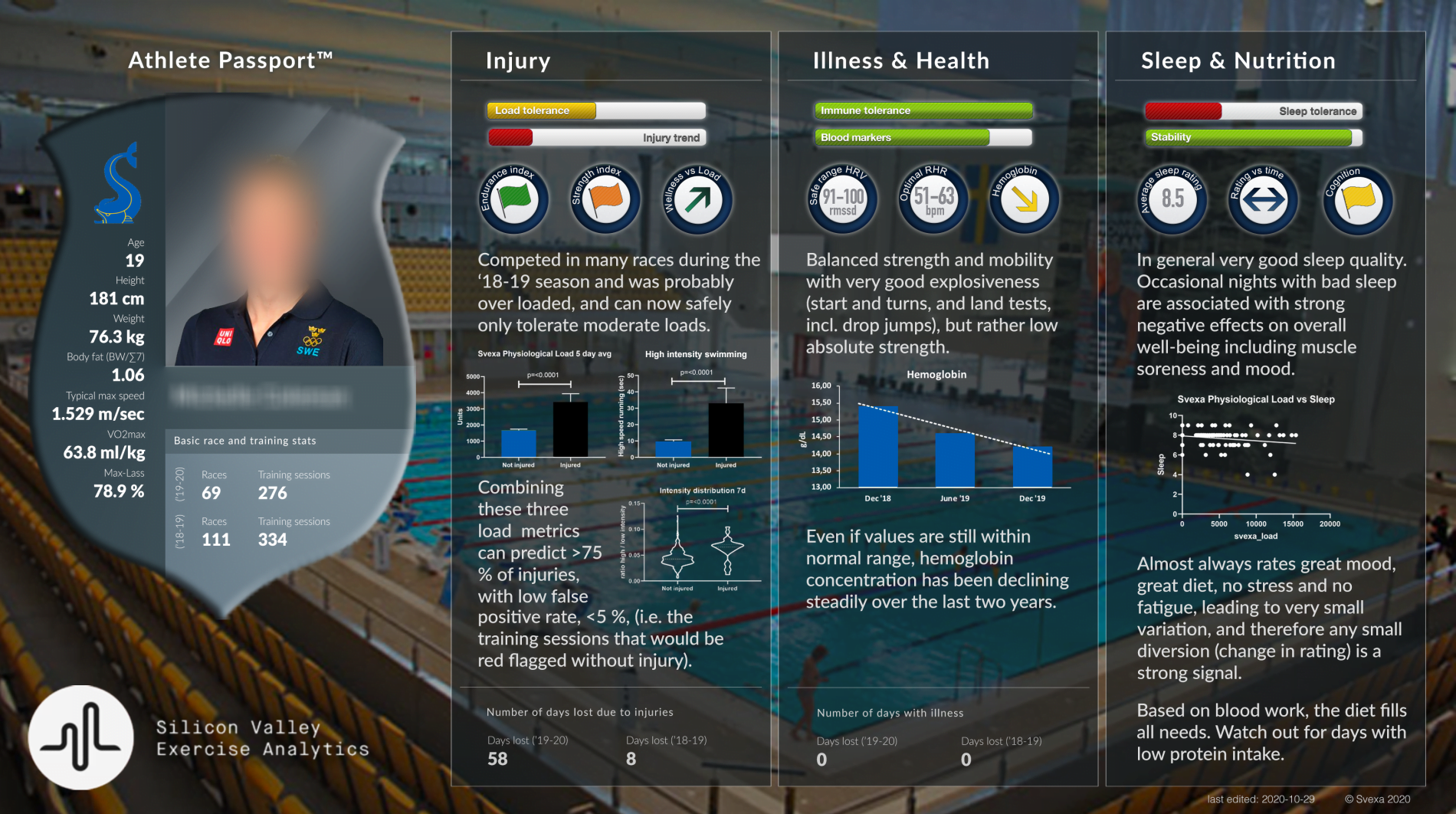
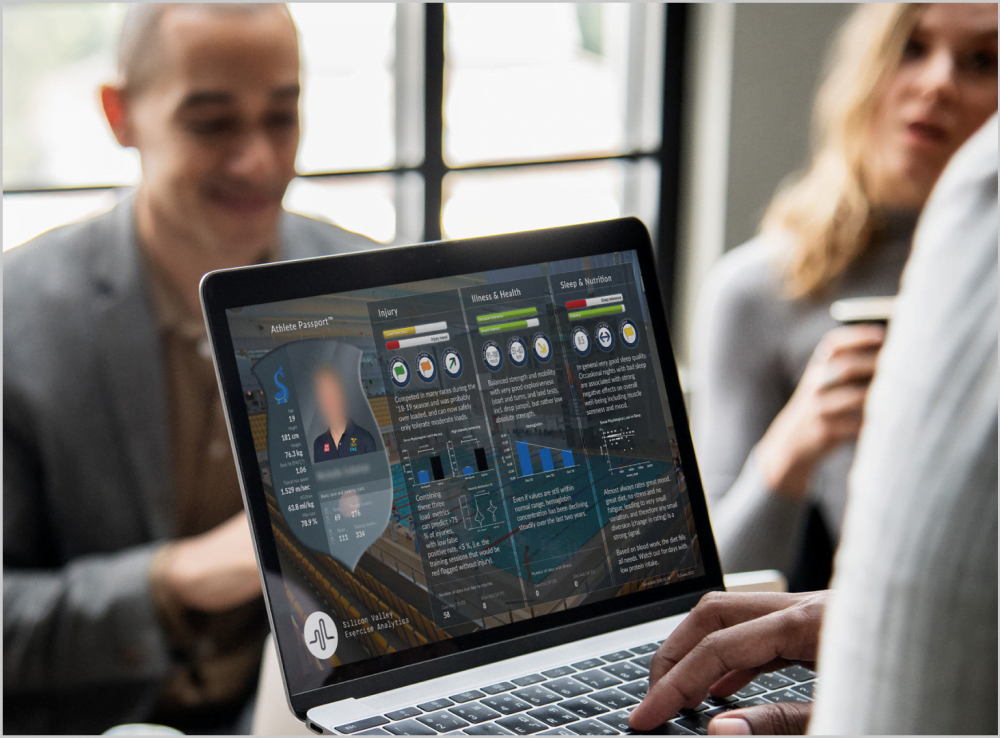
The Athlete Passport® is svexa’s solution to this problem: a comprehensive, longitudinal record of every aspect of an athlete’s performance and health history, structured to surface long-term patterns and support evidence-based career management.
every data point one story
What the Athlete Passport® Contains
The Passport is a continuously updated, structured record that aggregates data from all sources within the svexa ecosystem — and beyond. Key components include:
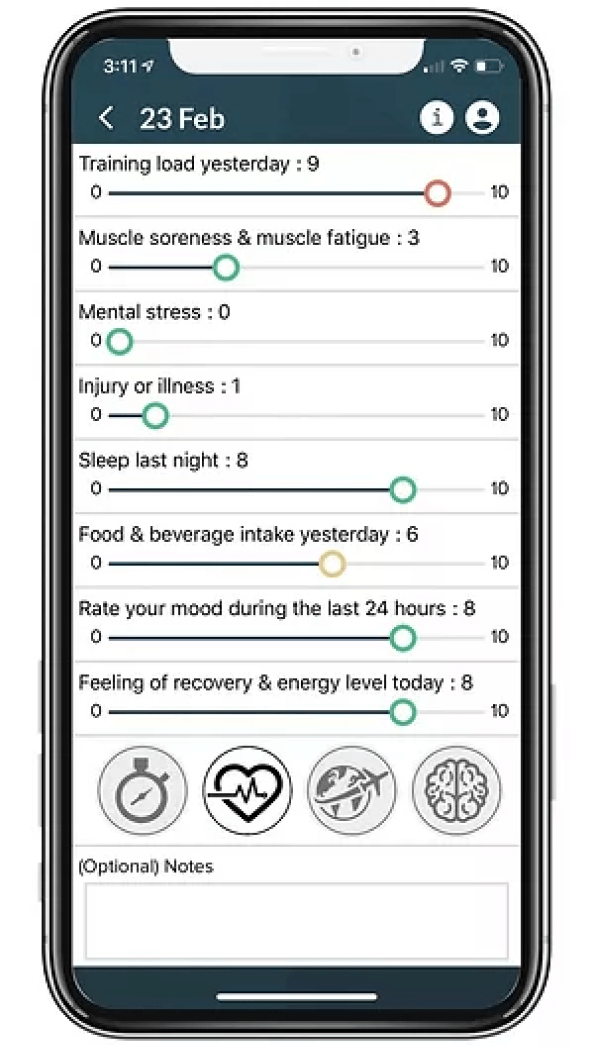
- Complete training load history with daily, weekly, and annual summaries
- Physiological testing results across career — VO2max, lactate threshold, power output, strength metrics
- Injury history with biomechanical and load context for each incident
- Sleep quality and recovery trends across seasons
- Illness episodes and their training impact
- Competition performance history with physiological state context
- Nutrition and body composition longitudinal tracking (where collected)
Long-Term Pattern Recognition
The real value of the Athlete Passport® emerges over time. Svexa’s analytics engine continuously scans the longitudinal record for patterns that have predictive or explanatory value: the load sequence that consistently precedes this athlete’s injury episodes; the seasonal point at which their aerobic capacity peaks; the sleep pattern that correlates most strongly with their best competition performances. These patterns, invisible in short-term data views, become actionable intelligence that supports evidence-based career management.
Portability and Athlete Ownership
A foundational principle of the Athlete Passport® is that the data belongs to the athlete. In a sporting career spanning multiple clubs, national teams, coaches, and support staff, continuity of data record is frequently lost when an athlete changes environment. The Passport travels with the athlete, ensuring that the accumulated physiological intelligence of their career is preserved and accessible to their current support team — with full athlete control over data sharing permissions.
This approach aligns with emerging international data governance frameworks and the principles of data portability enshrined in legislation such as the GDPR, and with growing calls within sport science for standardised, athlete-owned performance records.
The World Anti-Doping Agency’s Athlete Biological Passport program demonstrates how longitudinal physiological data can provide far richer insight than single time-point measurements — svexa’s Passport extends this philosophy across the full performance monitoring spectrum.
Key Benefits
- Complete career-spanning performance and health record in a single system
- Long-term pattern recognition revealing trends invisible in short-term data
- Athlete data ownership with granular sharing controls
- Continuity of physiological intelligence across career transitions
- Foundation for predictive career development modeling
The Athlete Passport® is the longitudinal backbone of the IRMA platform. Learn more about svexa’s full solutions suite.
focus on what’s important
Many athlete coaching systems use standard cutoff values for everyone, treating all athletes as if they are the same. Svexa brings much deeper physiological expertise to bear, testing many possible correlations to identify the truly insightful analyses for each individual athlete.
Coaches are often swamped with many data variables captured daily for their athletes. Athlete Passport (R) provides clear guidance on which few metrics are the key factors for each individual, that will flag an increased likelihood of injury and enable optimum training, recovery and performance.