
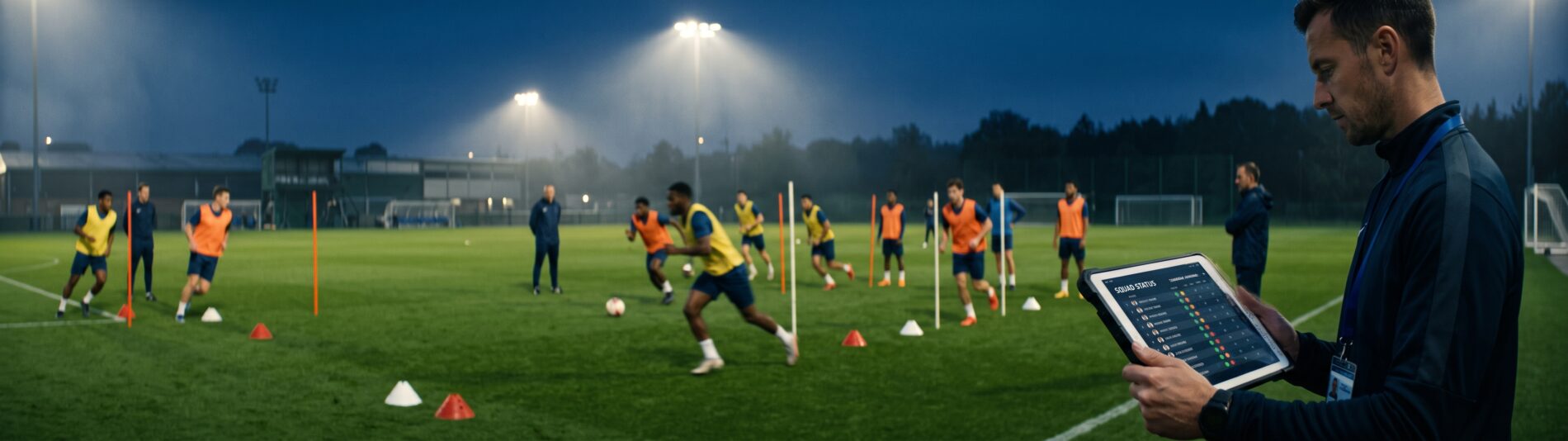
Keep your best players on the pitch
Zone7, part of svexa, uses AI to deliver injury risk forecasting for every player, every day, and recommends how to adjust their load before an injury happens. It’s the same individualized, physiology-first science as svexa’s endurance products, built for the speed and complexity of professional team sport.
40%
fewer days lost to injury
in professional soccer and NFL
in professional soccer and NFL
>15x
more accurate than common
GPS-based load metrics
GPS-based load metrics
~75%
of imminent injuries flagged
in previously injured players
in previously injured players
<4%
false-positive rate
at that sensitivity
at that sensitivity
Availability wins titles
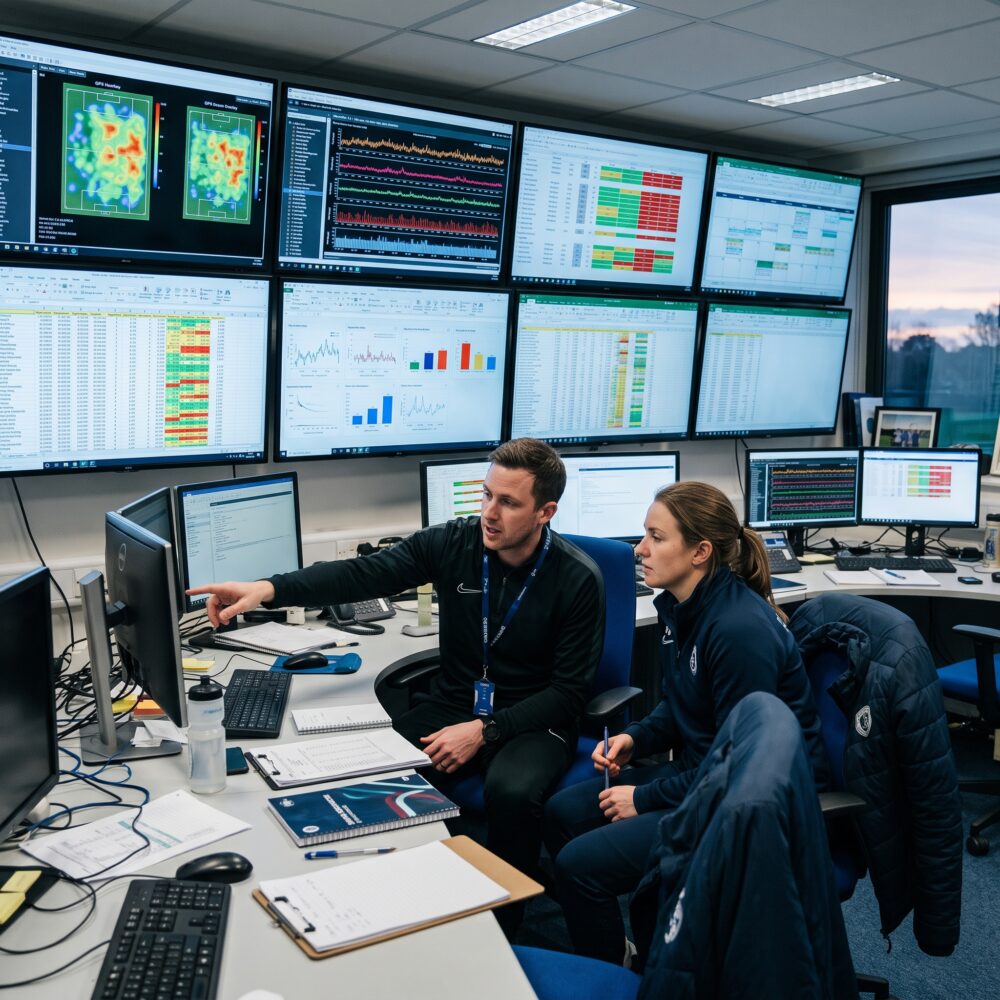
Injuries cost clubs points, prize money and transfer value. Yet most performance departments still pull data from many separate systems: GPS, heart rate, strength testing, wellness questionnaires, medical records. They then rely on staff to piece it together each day. In fact, svexa was born from that problem: in 2014 a Premier League Head of Performance described manually aggregating eleven data sources to plan next-day training for each player.
Zone7 replaces that manual work with a single, individualized forecast.
How injury-risk forecasting works
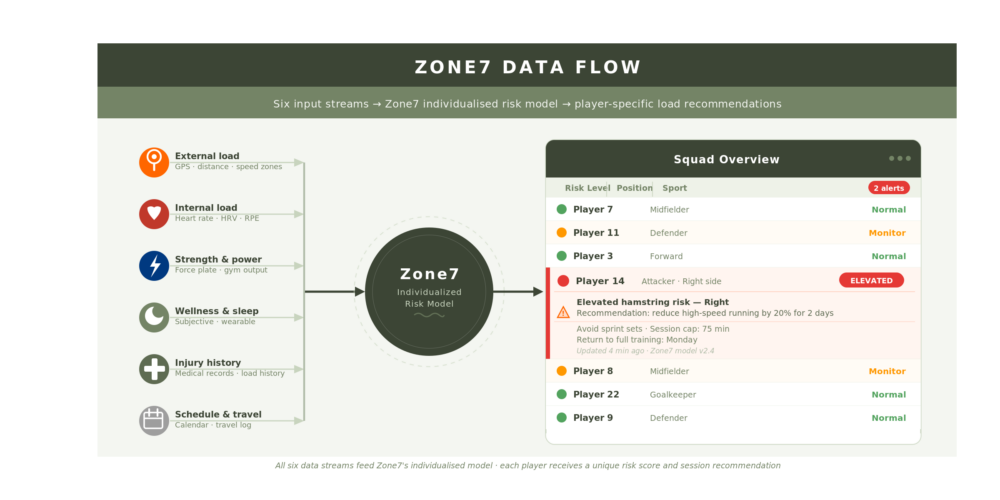
- Integrate: Zone7 brings together workload (GPS and external load), strength and power, recovery and wellness, medical history and environmental context such as schedule and travel.
- Individualize: Each player’s data is interpreted against his or her own baseline and history, not a squad average. The same session can carry very different risk for two players.
- Forecast: AI models estimate each player’s injury risk and likely injury type, updated daily.
- Recommend: Practitioners get specific load-management prescriptions: who to modify, how, and the data patterns behind every alert.
- Learn: Outcomes feed back into the models, which continuously evolve. The platform also identifies which of a club’s many datasets genuinely improve accuracy, and which are noise.
Zone7 offerings for teams
- AUDIT: retrospective insight
Monthly reporting on injury and load patterns, data-quality monitoring across performance and medical data, and trend analysis of injury incidence, time-loss and injury types. Clear summaries for practitioners, coaches and sporting directors. - PRO: daily forecasting
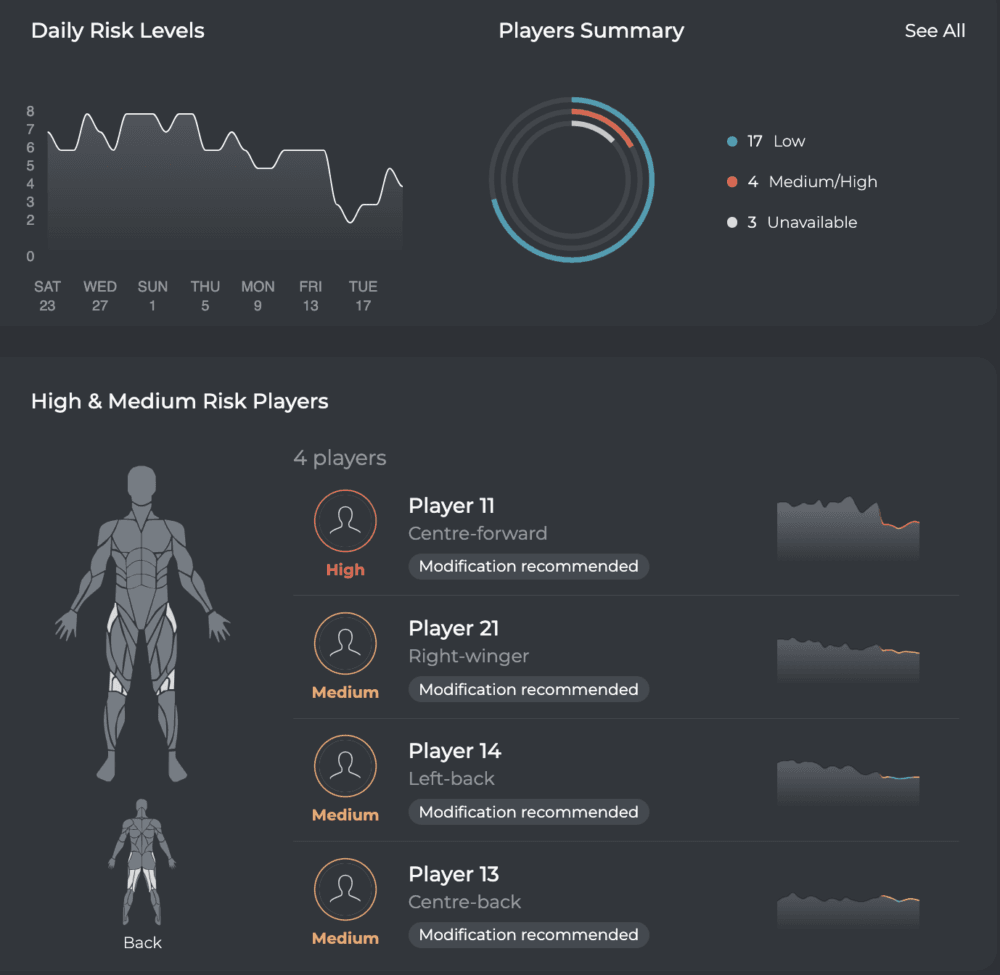
For soccer, American football, basketball and other team sports. Real-time injury-risk and injury-type forecasting, load-management prescriptions, a weekly planner and a periodization simulator, on mobile and desktop, with the data patterns behind every forecast. - ELITE: collaborative research
Custom projects with svexa’s sports and data scientists, such as fixture-congestion impact, travel effects and player resilience, with expedited support.
The Evidence
- Individualized load beats GPS load
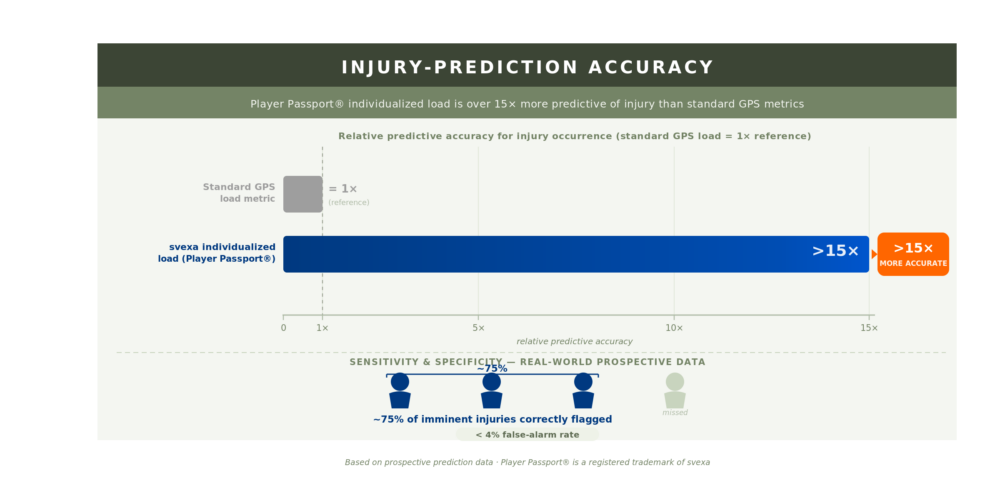
In elite soccer, an individualized training-load metric, a component of svexa’s Athlete Passport®, was found to be more than 15 times more accurate than commonly used GPS-based load metrics at predicting injury risk. It correctly flagged around 75% of imminent injuries in previously injured players while keeping the false-positive rate below 4%. Source: svexa Proof of Accuracy validation. - Days lost
Svexa’s vector-based training load has helped professional teams in top tier soccer and NFL reduce days lost to injury by 40% on average - Club case studies
Published Zone7 case studies include a 70% reduction in injuries at a top LaLiga team, improved availability at EPL and MLS teams, and algorithm support for an elite team during their quadruple-title pursuit, plus retrospective validation studies with clubs in the UEFA Champions League, EFL Championship and LaLiga 2.
Beyond the individual: squad and recruitment decisions
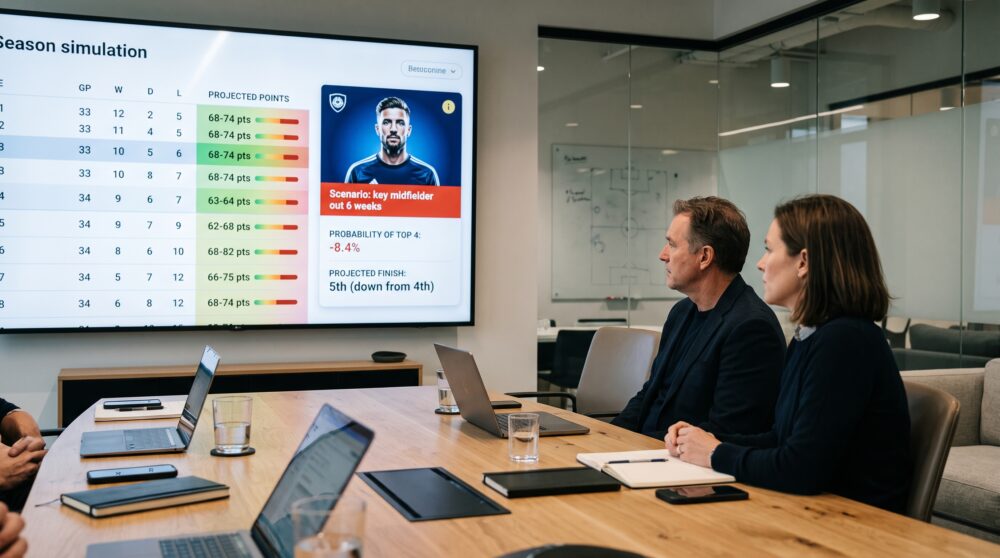
The same prediction-to-decision approach scales up to the boardroom. Svexa developed an analytical tool for professional clubs that uses individual player-risk predictions to simulate the effect of a specific player’s injury or transfer on team and league outcomes, informing squad planning and recruitment, not just reporting injury likelihood.
Werder Bremen (Bundesliga) used individualized Athlete Passports® and injury prediction models built by svexa, and for one Premier League club svexa built an injury-prediction algorithm from retrospective training and injury data.
FAQ
- Can AI predict sports injuries?
AI can’t predict every injury, but it can identify when an individual player’s risk is elevated. Zone7’s individualized models flagged around 75% of imminent injuries in previously injured players with fewer than 4% false alarms, early enough for staff to adjust load. - What data does Zone7 use?
External and internal workload (GPS, heart rate), strength and power testing, wellness and sleep, injury history, and context such as fixtures and travel. It integrates with the data a club already collects. - How is Zone7 related to svexa?
Zone7 is a svexa company. It applies svexa’s individualized, physiology-first science to injury risk and load management in team sport. - Which sports does Zone7 support?
Football/soccer (men’s and women’s), American football and basketball, with custom research for other sports and the military.
Continue exploring svexa science
- Proof of accuracy
- Digital twin technology
- Scientists & publications
newsletter signup
Once in a while we send our subscribers a newsletter with corporate news, useful industry information or just a sneak peek of what we’re doing at svexa.