Introduction: The Data Explosion That Changed Sport
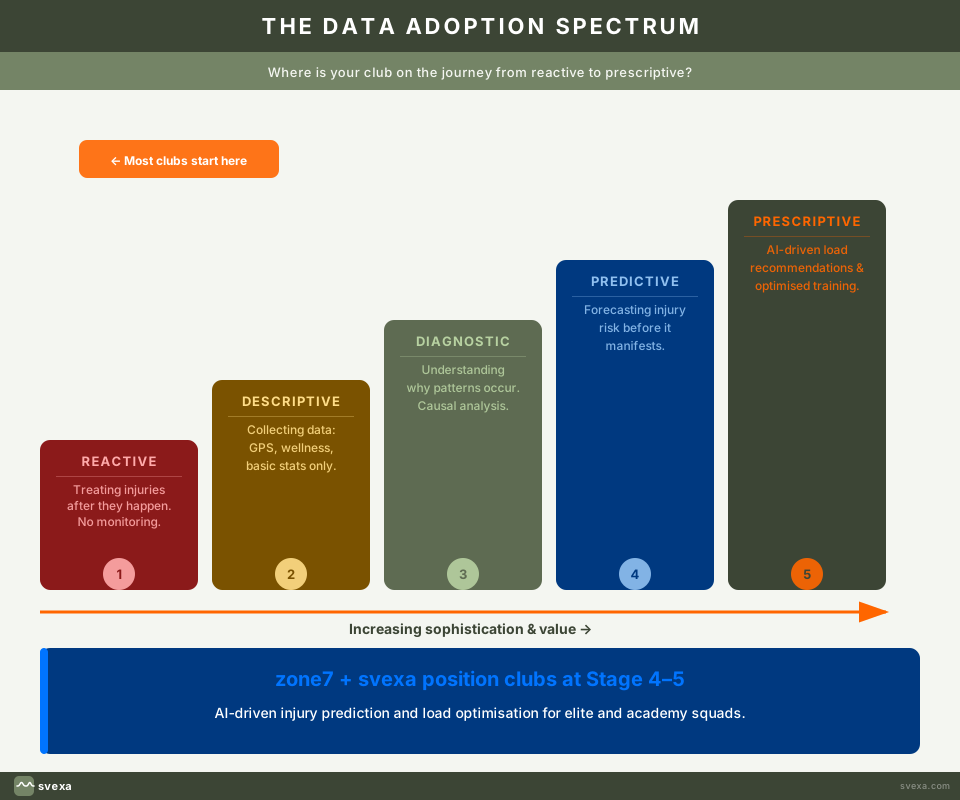
Professional sport in 2025 sits at a data inflection point. A decade ago, cutting-edge clubs were distinguished by the adoption of GPS tracking and basic analytics. Today, the frontier has moved: clubs at the leading edge of data adoption are building integrated physiological monitoring ecosystems, deploying machine learning models for injury prediction and tactical analysis, maintaining longitudinal databases that span player careers, and increasingly using digital twin models to simulate training and performance outcomes before exposing athletes to real-world experiments. This progress, however, is distributed very unevenly. While a small number of clubs and national federations operate data programs that are genuinely world-class by any scientific standard, the majority of professional sports organizations – including many in top-flight leagues – are operating with fragmented data infrastructure, limited analytical capability, and significant unrealized potential from the data they already collect but cannot fully exploit. This article draws on published research, industry surveys, and svexa’s direct experience working with organizations across elite sport to provide a structured overview of where the industry stands in 2026 and where the significant opportunity for improvement lies.
Data Collection: Wide Adoption, Fragmented Infrastructure
The first generation of sports data tools – GPS tracking, heart rate monitoring, video analysis – is now near-universally adopted across the top two professional tiers of major sports like soccer, US football, rugby, basketball, cricket etc globally. However, adoption of data collection hardware has not been matched by investment in data infrastructure. The most common pattern is a proliferation of data sources i.e. GPS from vendor A, wellness questionnaire from platform B, blood results from clinical system C, training plans from spreadsheets… with no coherent integration layer connecting them. A conservative estimate is that fewer than 30% of top-flight professional clubs operate a genuinely integrated athlete monitoring platform, one in which all relevant data sources flow into a single athlete profile that can be queried and analyzed in combination. The rest operate in a state of data fragmentation where the analytical potential of their combined data is systematically unrealized.

Key Trends Shaping Performance Data in 2025
AI Transition: From Rule-Based to Predictive Algorithms
The transition from threshold-based alert systems (“flag any athlete with ACWR > 1.3”) to genuinely predictive machine learning models represents the most significant analytical advance of the current era. AI models trained on large longitudinal athlete datasets can identify injury risk and performance decline patterns that are invisible to threshold-based systems – particularly the multi-variable, ‘low threshold individually’ patterns that are most clinically important. Early adopters are seeing tangible availability and performance improvements from AI deployment. This of course is what Zone7 by svexa delivers, with AI-driven simulation of load enabling daily reporting of individual risk levels.
Athlete Data Ownership and Portability
An increasingly important governance trend is the move toward athlete-owned data. Professional player associations in multiple sports are now negotiating data rights frameworks that give athletes ownership and portability of their monitoring data – the right to take their physiological history with them when they move clubs. Organizations that build their performance infrastructure on closed, vendor-locked data platforms are increasingly exposed to athlete and regulatory pushback on this issue. Svexa has embraced this philosophy since the beginning, embodied in our Athlete Passport product.
Integration of Contextual Data
Leading programs are expanding their definition of relevant performance data beyond physiological metrics to include contextual variables: travel schedules, fixture congestion indices, weather and altitude data for competition venues, match tactical demands, and family/life-stress indicators. The integration of contextual data with physiological monitoring substantially improves the predictive power of readiness and injury risk models.
The Persistent Challenge: Analytics Capability Gap
Data collection has outpaced the analytical capability to use it effectively in most organizations. The gap between the data that clubs collect and the insights they extract from it is one of the most significant waste factors in elite sport performance infrastructure. Addressing this requires either investment in internal data science capability (difficult for most clubs) or partnership with specialist providers like svexa that can operate analytical infrastructure as a managed service.
Recommendations for Organizations in 2025
- Audit your data integration: map all current data sources and identify integration gaps. Prioritize closing the largest gaps.
- Invest in a central analytics platform before adding more data collection hardware: the marginal value of a new sensor is low without the infrastructure to integrate it.
- Adopt AI-powered injury prediction for your first team immediately: the ROI is established and the cost of inaction is high.
- Develop an athlete data governance policy: address ownership, portability, and consent before regulatory pressure forces the issue.
- Build longitudinal data assets: the strategic value of athlete data compounds with time – start accumulating structured historical records now.
Contact Us any time to discuss how svexa and Zone7 can help you integrate data streams and make better use of this valuable resource to manage your roster risk and optimize performance.