The True Cost of Injury in Professional Sport
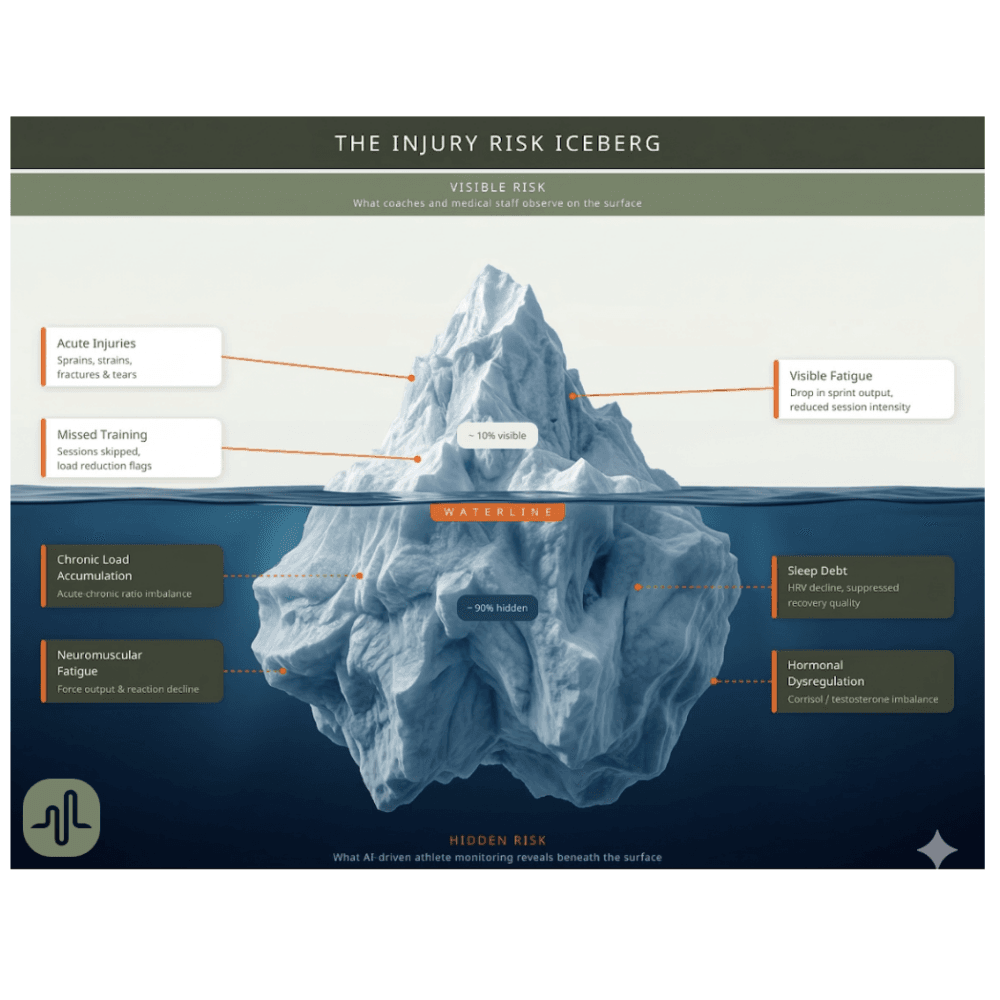
Injuries cost elite sports organizations millions of pounds, euros, and dollars every season — and that figure captures only the most visible costs. Wage costs for players on the injured list, medical and rehabilitation expenses, insurance premiums, and the performance value of unavailable key players compound to create a burden that, in top-flight football alone, exceeds €500 million annually across the top five European leagues. Yet despite this scale, injury prevention remains one of the most systematically underfunded and under-scientific areas of professional sport.
The good news is that a substantial proportion of soft-tissue injuries — estimated at 60–80% in most studies — are, if not entirely preventable, at least significantly reducible with data-driven monitoring and evidence-based management. This guide synthesizes the current state of injury prevention science for team sports practitioners, from training load management to AI-powered risk modeling, to help performance staff build more resilient squads.
Understanding the Multifactorial Nature of Sports Injuries
One of the most important conceptual advances in sports injury science over the past decade has been the shift from single-cause to multifactorial injury models. The traditional view — that injuries happen because of one bad training session, one biomechanical weakness, or one unlucky collision — has given way to a more sophisticated understanding in which injuries represent the tipping point of accumulated risk across multiple interacting domains.
The Oslo Sports Trauma Research Center‘s comprehensive injury model identifies four categories of injury risk factor: sport-related exposure, athlete susceptibility factors, protective factors, and inciting events. An athlete who is well-rested, has an appropriate training load history, and is well-nourished can absorb an inciting event that would injure their sleep-deprived, overloaded counterpart. This means that effective injury prevention must address all four categories simultaneously — not just focus on acute load spikes or biomechanical screening.
Key modifiable risk factors identified in the British Journal of Sports Medicine include: previous injury history (the strongest single predictor), training load and its acute-to-chronic ratio, sleep quality and quantity, psychological stress, travel and jet-lag, and nutrition status. A robust prevention program addresses all of these.
Training Load Management: The Foundation of Injury Prevention
The relationship between training load and injury risk is now one of the best-documented in sports science. The acute:chronic workload ratio (ACWR) framework — developed by Dr Tim Gabbett and colleagues — has been historically used to provide a practical tool for quantifying injury risk: when the weekly training load (acute load) substantially exceeds an athlete’s recent monthly average (chronic load), injury risk rises sharply. Research consistently demonstrates a “sweet spot” where moderate acute loads relative to chronic loads minimize risk while maintaining fitness.
More recent scientific advances and analytical capability have allowed us to move beyond the ACWR. In practice, using any such framework for risk management means monitoring individual athlete loads daily, tracking the rolling 4-week chronic load baseline for each player, and flagging athletes whose risk profile exceeds established thresholds. GPS-derived metrics (distance, high-speed running, accelerations and decelerations) provide the external load picture; internal load measures such as heart rate and session RPE (rating of perceived exertion) provide the physiological stress complement.
Critically, load management is not about minimising training — it is about optimising it. Chronically underloaded athletes are also at increased injury risk, as insufficient preparation reduces tissue resilience. The goal is to build robust athletes through progressive, well-monitored loading, not to restrict training out of fear.
AI and Machine Learning in Injury Prediction
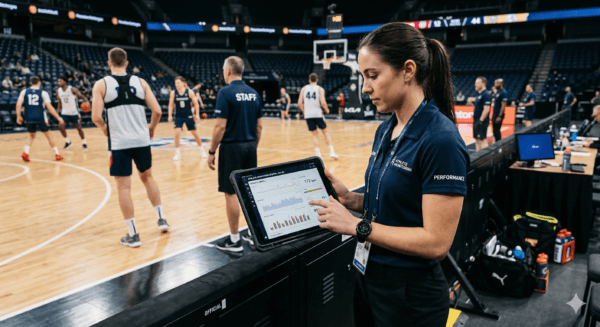
The emergence of machine learning approaches to injury prediction has added a powerful new layer to injury risk management. Rather than relying on single metrics or simple thresholds, AI models can integrate dozens of variables simultaneously — training load history, HRV trends, sleep data, previous injury patterns, age, position-specific demands, fixture congestion, and travel schedule — to generate individualized risk scores for each athlete on a daily basis.
Zone7’s injury prediction platform, deployed by professional clubs across football, rugby, and basketball, uses this multi-factor approach to provide daily risk scores that have been independently validated against real injury outcomes. The system identifies risk patterns that human observation alone cannot detect reliably at scale.
Read more about how Zone7 uses AI to predict and prevent injuries in team sports, and explore how svexa’s Zone7 solution has been applied across professional football.
Recovery, Sleep and the Hidden Injury Risk Factors
Training load accounts for a substantial portion of injury risk, but it does not operate in a vacuum. Sleep deprivation is now recognized as one of the most potent injury risk amplifiers in the scientific literature. A landmark study published in the Journal of Pediatric Orthopaedics found that athletes sleeping fewer than eight hours per night had a 1.7-times greater risk of injury than those sleeping eight or more hours. The mechanisms are clear: sleep is when soft tissue repair occurs, when the neuroendocrine system recovers, and when motor learning is consolidated.
Psychological stress is another frequently underestimated contributor. Research from the biopsychosocial model of athletic injury demonstrates that high life stress impairs attentional capacity and alters neuromuscular control, increasing vulnerability during high-demand physical tasks. Holistic athlete monitoring that integrates subjective wellness alongside objective physiological data provides the most complete picture of daily injury risk.
Building Your Injury Prevention Program: Key Principles
- Establish individual training load baselines: injury risk is always relative to the individual’s history, not population norms
- Monitor both external and internal load: GPS metrics without physiological context miss the full picture
- Integrate objective and subjective data: HRV, sleep metrics, and wellness questionnaires each add unique information
- Implement graduated return-to-training protocols: re-injury prevention is as important as initial prevention
- Use AI-powered risk modeling to identify multi-factor risk accumulation before symptoms appear
- Build a culture of data transparency: athletes who understand their monitoring data are more compliant with load management recommendations
For a deep dive into how integrated athlete monitoring supports injury prevention, explore svexa’s IRMA platform and Overtraining Detection solution. To see how Zone7’s AI has reduced injuries in professional football, visit zone7.ai or read how Zone7’s approach was featured in Soccerscene.