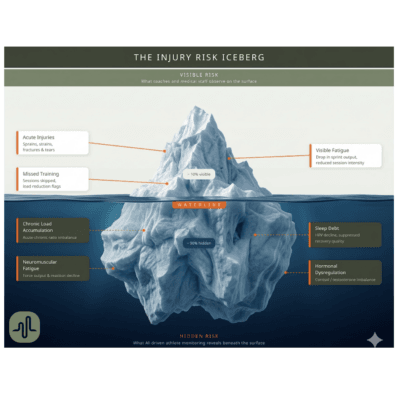
Congestion: A Crisis That’s Getting Worse
The debate over fixture congestion in elite football has reached a new intensity in recent years. With the introduction of the expanded UEFA Champions League format (increasing from 6 to 8 group stage matches), combined with expanded national cup competitions, international windows, and the Club World Cup, top-flight clubs are now routinely managing schedules that were unthinkable even a decade ago. For players competing at the highest level i.e. Champions League plus domestic league, cup, and international duty, playing 60–70 matches per season is no longer exceptional. It is becoming the norm. The physiological argument against this schedule density is not one of opinion. It is grounded in published research that clearly establishes the relationships between inter-match recovery time, accumulated fatigue, and soft-tissue injury risk. This article presents the evidence for the benefit of performance staff navigating the real-world challenge of keeping athletes healthy in congested fixture periods.
The Science: What Happens Physiologically in Congested Periods
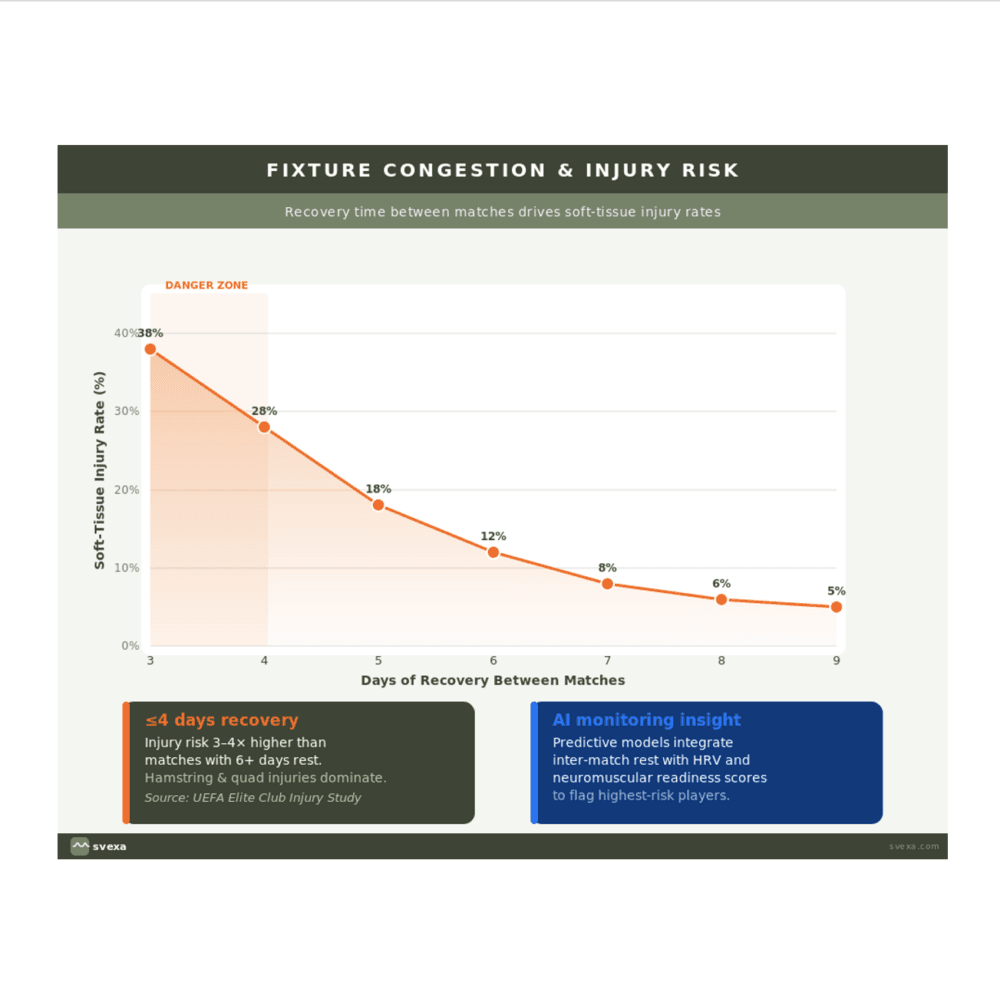
Following a competitive match, muscle glycogen is significantly depleted and will not be fully restored for 48–72 hours. Muscle damage, measurable via blood creatine kinase (CK) elevation and MRI-assessed ultrastructural disruption, typically peaks 24–48 hours post-match and is not resolved for 72–96 hours in well-conditioned players. Neuromuscular function, assessed via countermovement jump performance, shows a characteristic pattern of acute reduction followed by gradual recovery that may not be complete until 72 hours post-match. Research published in the British Journal of Sports Medicine by Bengtsson and colleagues, examining 27 seasons of Scandinavian football data, found that matches played with fewer than four days’ recovery were associated with a 2.7-fold increase in muscle injury risk compared to matches with five or more days’ rest. Hamstring injuries, the most common and costly soft-tissue injury in football, were particularly sensitive to congestion effects. A separate analysis of Elite European club data found that congested match periods (three matches in seven days) were associated with injury rates approximately twice the seasonal average.
High-Risk Players in Congested Periods
Not all players are equally vulnerable to the injury-amplifying effects of fixture congestion. Research has identified several characteristics associated with elevated congestion-period risk:
- High playing time: players accumulating 70+ minutes per match are at substantially greater risk than those with shorter average playing time
- Previous hamstring or quad injury: scar tissue and altered neuromuscular recruitment patterns increase vulnerability during fatigued states
- Older players: recovery from match load is consistently slower in players over 30, and the congestion window narrows before risk rises sharply
- Players with recent illness: even subclinical illness suppresses immune function and slows tissue repair
- Players with high absolute sprint loads: those consistently running the highest total sprint distances accumulate greater muscular stress

Load Management Strategies During Congested Periods
Given the documented risk, the performance challenge is to maintain sufficient training stimulus to prevent deconditioning while protecting against congestion-period injury. Evidence-based strategies include:
- Match rotation: systematically rotating the squad during congested periods, rather than fielding the strongest available XI regardless of fixture frequency, is the most effective single intervention. Teams that successfully implement rotation maintain squad availability while protecting key players from accumulated load.
- Session design modification: training sessions between closely-spaced fixtures should prioritize tactical and technical work over high physical loads. High-speed running volumes in training should be reduced when inter-match recovery is less than 72 hours.
- Individual load profiling: AI-powered load management platforms can identify which specific athletes are accumulating highest congestion risk in real time, enabling targeted intervention rather than blanket load reduction across the squad.
Zone7 by svexa is specifically designed to tackle these sorts of challenges. It allows team coaches and performance staff to first build out their typical weekly training sessions, then on a daily basis to easily identify which players are at risk of injury. Our AI allows them to test changes to session design for individual players, simulating the workload and adjusted risk over upcoming days.
The Player Welfare Perspective
Fixture congestion is not only a performance and injury risk issue, it is a player welfare and safeguarding concern. Professional footballer bodies including FIFPro have published research documenting the long-term health consequences of sustained overplay: elevated rates of cardiovascular events in retired footballers, higher incidence of mental health disorders, and significant degradation of quality of life post-career. Any performance program that does not take the long-term health consequences of its decisions seriously is operating below the ethical standards the profession demands.
Zone7’s AI-powered load planning system was specifically designed for congested fixture periods, providing daily risk scores and load recommendations that account for inter-match recovery dynamics. Explore Zone7’s capabilities or learn more about svexa’s approach to team sports performance management. Contact Us any time to discuss how our products could help your team keep key players on the pitch.