Women’s Soccer Performance Science is at a Crossroads
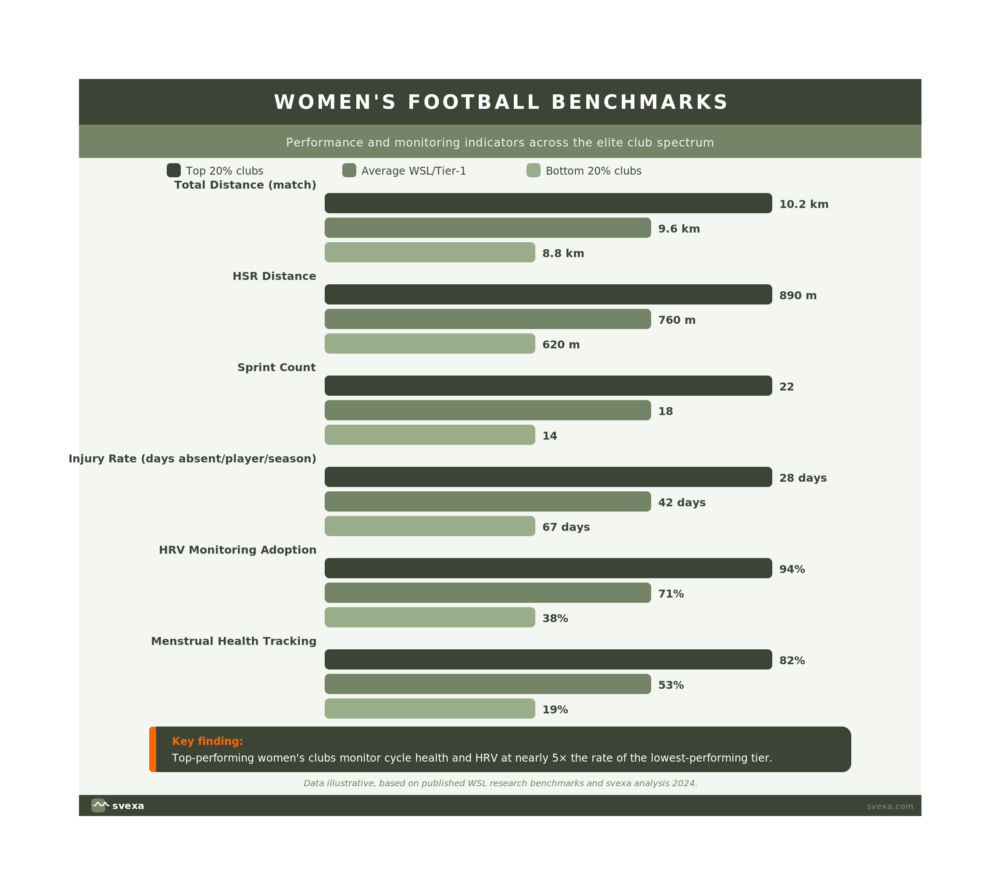
The commercial and sporting growth of women’s soccer over the past five years has been extraordinary. WSL attendances have broken records. The FIFA Women’s World Cup generated global viewership numbers that surprised even optimistic broadcasters. Investment in clubs, player salaries, media rights, and infrastructure has escalated sharply. Yet for all this growth, the performance science provision supporting women’s soccer players at most clubs remains substantially behind what comparable male athletes receive. This benchmarking report draws on practitioner survey data, published academic literature, and svexa’s experience working with women’s sports organizations. It maps the current state of performance science provision in women’s soccer and identifies the highest-priority gaps. It is intended as a resource for performance directors, head coaches, and club leadership teams who are committed to closing the gender gap in performance science investment.
Survey Findings: Where Women’s Soccer Performance Science Stands
GPS and Load Monitoring
GPS tracking adoption in top-tier women’s soccer is now high – approximately 80–85% of WSL and top NWSL clubs report full squad GPS monitoring in training and matches. However, the sophistication of data use lags behind men’s programs significantly: fewer clubs have dedicated sports science analysis staff, GPS data more often flows to spreadsheets than integrated analytics platforms, and load management protocols are less systematically applied.
Injury Monitoring and Prevention
Injury incidence data in women’s soccer is less comprehensively published than in men’s soccer, but available research suggests that while overall injury rates are comparable, ACL injury incidence is substantially higher in women’s soccer (approximately 2–4x the rate observed in equivalent-age male cohorts). This well-documented disparity, attributed to a combination of anatomical, hormonal, and training-exposure factors, has not yet driven proportionate investment in ACL-specific prevention protocols in most women’s clubs.
Menstrual Cycle and Female Physiology
Despite growing scientific evidence (see our companion piece on cycle-informed training) and meaningful recent progress in practitioner awareness, cycle-informed training remains the exception rather than the rule in women’s soccer. Fewer than 30% of surveyed clubs report systematic cycle tracking and phase-specific training modification. The primary barriers are practical i.e. lack of standardized protocols, insufficient staff time, and athlete privacy concerns, rather than scepticism about the evidence base.
Mental Health and Wellbeing
Women’s soccer practitioners report significantly higher rates of athlete-reported mental health concerns compared to men’s soccer counterparts, consistent with broader research on mental health prevalence in elite female athletes. Sports psychology provision, however, remains significantly lower in women’s soccer, with many clubs accessing psychology support only reactively (following a crisis) rather than proactively through embedded practitioner programs.
Priority Recommendations for Women’s Soccer Organizations
- Invest in dedicated sports science staff – not shared with men’s programs. Women’s soccer has specific physiological, biomechanical, and psychological demands that require specialist knowledge and consistent presence.
- Implement systematic cycle tracking and phase-informed training modification. The science is clear; the barrier is practical. Standardized protocols and athlete-controlled data sharing can address the practical challenges.
- Develop ACL-specific prevention protocols based on current evidence, including perimenstrual risk-window awareness and neuromuscular training.
- Integrate subjective wellness and mental health monitoring into daily performance workflows – normalize psychology support as a performance tool, not a crisis resource.
- Build a longitudinal data record for every athlete – women’s soccer lacks the decades of normative data available in men’s sport, so beginning to build it now is a strategic priority.
The Commercial Case for Investment
Improved performance science provision is not just the right thing to do for athlete welfare – it is increasingly a commercial differentiator in the competition for the best women’s soccer talent. Elite female players and their representatives are increasingly sophisticated consumers of performance support provision, and clubs with world-class performance science infrastructure will have an advantage in recruitment conversations as the women’s game professionalises further.
Svexa’s monitoring platforms support the full range of performance science requirements identified in this survey — from cycle-informed readiness monitoring to longitudinal Athlete Passport records and Zone7’s AI injury risk platform. Contact svexa to discuss performance science provision for your women’s soccer program.